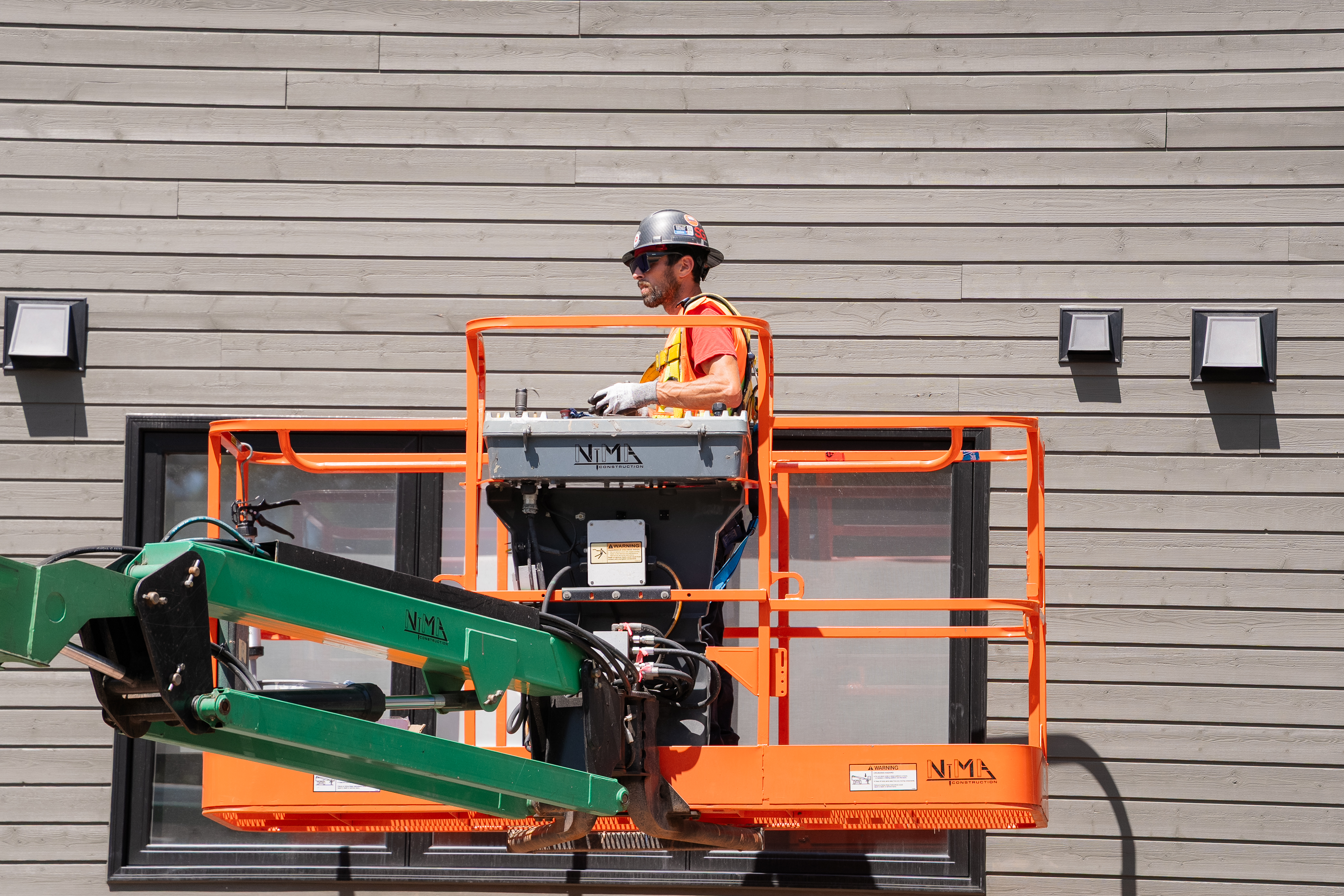
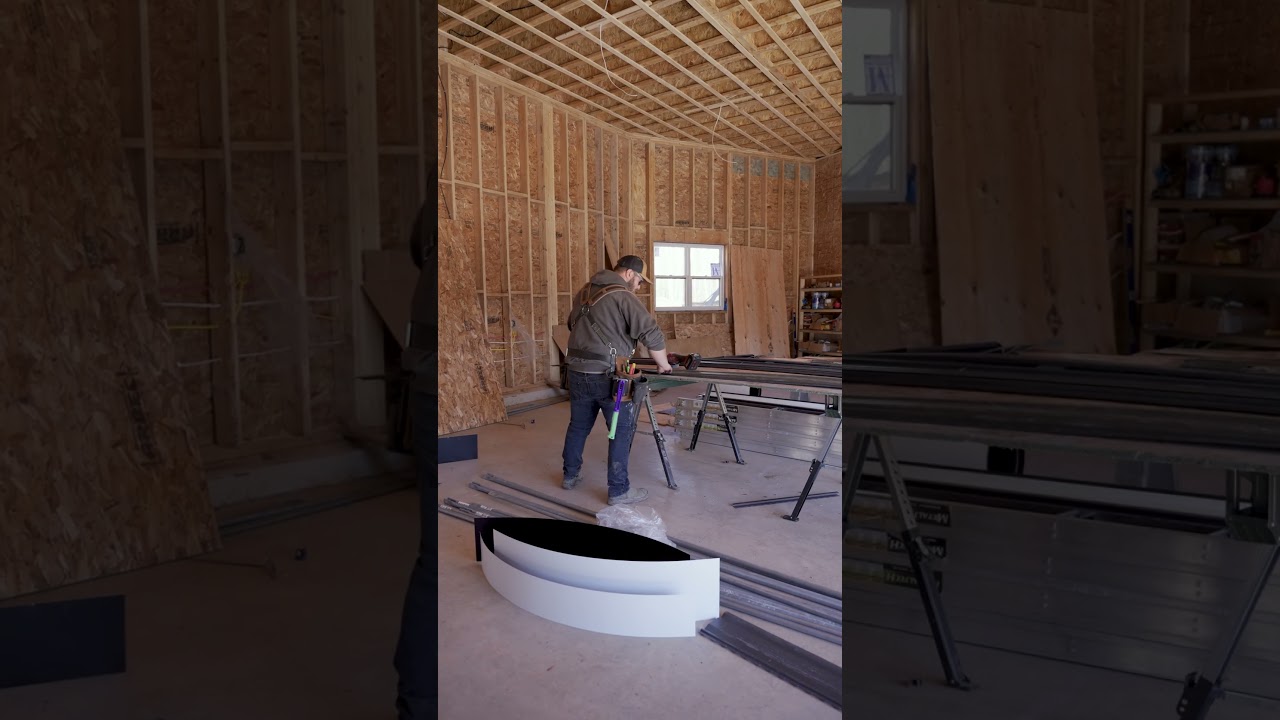
On a commercial build on Cleveland Rd in Riverview, the structure was up and the walls were not. Open steel, open framing, wind moving straight through the middle of it. And yet the site was fully powered — heaters running, saws running, masonry crews working through a full day without a single generator cord snaking across the ground.
That is not an accident. It is a piece of engineering that somebody planned months earlier, and almost nobody outside the trade has ever seen it. So we filmed it.
We have been working with LuMar Electric on both sides of the same problem: producing the video, and building the digital marketing strategy that decides what gets filmed in the first place. This post is a look inside one shoot — and inside the system we run for commercial contractors across Moncton, Riverview, Dieppe, and the rest of Atlantic Canada.
The Shoot: Electrical Rough-In and Temporary Power in Riverview, NB
LuMar Electric has been in business since 2011. Licensed, insured, COR® certified for occupational health and safety, with crews running out of Moncton, New Brunswick and Stratford, Prince Edward Island. They do service and repair, new residential construction, new commercial construction, automation and lighting control, permanent outdoor lighting, EV chargers and generators. They are not a two-truck operation — they are a company of well over a hundred people working across two provinces.
The brief for this piece was deliberately unglamorous. No sweeping brand film, no music-video montage of trucks at golden hour. Instead: put a licensed electrician on camera on an active jobsite and have him explain, in plain language, how power actually gets to a building that does not have walls yet.
The walkthrough covers three things a general contractor cares about and a homeowner has never thought about once:
- The rough-in stage. What goes in before the drywall closes the wall — and how the runs are prepped so the main panel connection later is a clean tie-in instead of a rework order.
- The C-can power setup. A shipping container converted into a secure, weather-proof temporary power hub. It is the piece of the job that makes the rest of the schedule possible, and it is invisible in every finished-project photo ever taken.
- Feeding the other trades. How temporary power is distributed so HVAC, framing, and masonry crews can run heavy tools all day without tripping each other or halting the sequence.
Five minutes and forty-nine seconds. One electrician, one site, no script read to camera. If you need commercial or residential electrical work in Greater Moncton, Riverview, Dieppe, or across PEI, that is the crew — lumarelectric.ca.
Why Explainer Content Beats the Brand Film for Commercial Contractors
Consumer-facing trades sell to homeowners, and homeowners buy on trust and appearance. Commercial contracting is a different sale entirely. The person deciding whether you get the electrical package on a $14M build is a general contractor, a developer, a project manager, or a facilities director. They are not moved by a drone shot. They are assessing one thing: does this company know what it is doing at our scale, and will it hold the schedule?
A polished brand film cannot answer that. A process walkthrough can. When a project manager watches five minutes of your electrician explaining temporary power distribution on an occupied site, they are not watching marketing — they are watching a competency assessment, and you are passing it before you have ever sat in the same room.
In commercial contracting, the best marketing asset you own is a clear explanation of the hardest thing you do. Everybody can shoot the finished building. Almost nobody films the part that proves they know how it got there.
There is a search argument on top of the sales argument. Nobody types "best electrical contractor Moncton" until very late in the process. Long before that, they type the problem: how temporary power works on a construction site, what happens during electrical rough-in, when a C-can setup makes sense, what a commercial panel upgrade involves. Explainer video answers those queries directly — which is also exactly the kind of source that AI search tools pull from when someone asks the same question in ChatGPT, Perplexity, or Google's AI overviews.
Brand films rank for your own name. Explainer content ranks for the question the buyer is actually asking, months before they know your name.
The Content System We Run for Commercial Contractors
One video is a nice thing to have. A system is what moves the needle. The strategy side of what we do for LuMar Electric is designed around one constraint that every contractor shares: crews are on the clock, and marketing does not get to slow the job down. Everything else follows from that.
1. One capture day, many assets
We film on a live site once, and we film with the edit already mapped. A single day on a jobsite yields the long-form explainer, three to five vertical cutdowns for Reels, TikTok and YouTube Shorts, a handful of clean b-roll sequences for the website, and stills. The crew is interrupted once, not five times.
2. Long-form as the anchor
The five-to-eight minute explainer is the asset that compounds. It gets indexed, it accumulates watch time, it answers a specific question permanently, and it gives you something substantive to link to in a bid package or a proposal email. Short-form gets attention; long-form earns credibility.
3. Vertical cutdowns for reach
The same footage, recut tight and vertical, is what puts the company in front of people who were not searching for it — including the tradespeople you want to hire. Our social media content work is built to run off the same capture day rather than requiring its own shoot.
4. Distribution that most contractors skip
This is where the return actually lives, and it costs nothing:
- Google Business Profile. Posting project video to your GBP feeds the map pack directly. Most contractors in New Brunswick have never posted a single video there. It is the cheapest local-search advantage available.
- Service pages on your own site. An embedded video on your commercial construction page raises dwell time and gives Google a reason to treat the page as substantive. A page with a real video and 800 words of specifics will beat a competitor's stock-photo page nearly every time.
- Bids and proposals. Link the relevant walkthrough in the estimate email. "Here is our crew doing exactly this scope on a site like yours." It closes the credibility gap between the number on the quote and the confidence to sign it.
- LinkedIn. Where the GCs, developers, and property managers actually are. Commercial contractors consistently underuse it.
- Recruiting. Every journeyman and apprentice in Atlantic Canada looks a company up before applying. Footage of real crews on real sites tells them more about whether they want to work for you than any job posting ever will.
5. Repeat monthly, and let the library compound
One shoot is a marketing expense. Twelve shoots is a searchable library covering twelve different scopes of work, each one catching a different set of queries and a different buyer. That is the part contractors underestimate: the second year of a content program is worth several times the first, because nothing you published in year one stops working.
Filming on an Active Commercial Site Without Slowing It Down
This is the part that separates a video company that says it works with contractors from one that actually does. An active commercial jobsite is a coordinated schedule with real money attached to every hour. A crew that treats it like a set is a liability.
What we bring to a commercial site:
- Full PPE and site orientation, every time. Hard hat, boots, hi-vis, eye protection. We complete your safety orientation like any other subtrade, and we follow the site supervisor, not our shot list.
- Respect for the sequence. We plan around the trade schedule. If masonry owns the north side at 10am, we are not standing in it. Filming happens in the gaps, and the gaps are identified before we arrive.
- Small footprint. Two people, run-and-gun capable, no lighting truck, no cable runs across walkways. If a shot requires shutting down work, we find a different shot.
- Interviews that do not require actors. Your foreman is not a presenter and should not be treated like one. We ask questions and let them explain their work the way they would explain it to a new apprentice. That is what reads as credible on camera.
- Drone where it earns its place. Aerials are excellent for scale and progress documentation, and useless as decoration. They get used when the site's size is the point.
- Confidentiality. Client names, drawings, and competitive details stay out of frame unless everyone has signed off.
We have shot in fireproofing and firestopping environments, on roofing and siding jobs, in industrial facilities, and on commercial builds mid-sequence. You can see more of that work on our construction video production and industrial video pages, or across the full portfolio.
Why Atlantic Canada Contractors Are Better Served by an Atlantic Canada Crew
Contractors in New Brunswick and Nova Scotia get pitched regularly by production companies in Toronto and Montreal. The math rarely works. A crew flying in bills travel, accommodation, and per diems before a single frame is shot — and they get one attempt at the weather. When the shoot has to move because a pour got pushed or a storm rolled in off the Bay of Fundy, a Moncton-based crew reschedules for next Tuesday. A crew from Ontario reschedules for next quarter, at cost.
There is a regional literacy point too. Knowing that a commercial project in Riverview is a different animal from one in Saint John, that crews routinely run between New Brunswick and PEI, that January framing weather is a real production variable, that a significant share of the workforce and the audience is francophone — none of that shows up in a scope document, and all of it shows up in the finished piece. We work in English, French, and Spanish, which matters for both client-facing content and internal safety and recruitment material.
We are based in Moncton and we film across New Brunswick — Dieppe, Riverview, Fredericton, Saint John, Miramichi — and throughout Atlantic Canada.
What a Commercial Contractor Should Film First
If you are starting from nothing, do not start with the brand film. Start with the four pieces that do work immediately:
- One process explainer. Pick the single most misunderstood part of your scope — the thing you explain in every kickoff meeting — and film someone explaining it on site. That one video will answer questions for years.
- One project walkthrough. A completed build, start to finish, with the difficult parts named. This is the piece you attach to bids.
- A recruitment piece. Real crews, real equipment, real site. Point it at the apprentices and journeymen you are competing for.
- A short-form set. Five to eight vertical clips cut from the above, so the company has a month of presence without a second shoot.
After that, the cinematic brand piece is worth making — because by then you have proof to put underneath it. The order matters more than the budget.
Questions Commercial Contractors Ask Us
Can you film on an active commercial construction site?
Yes, and we come ready to work inside your safety system rather than around it — full PPE, site orientation, direction from your supervisor, and no filming inside live work zones or under lifts. Shoots are planned against the trade schedule so the critical path is never the thing that moves.
What kind of video works best for a commercial contractor?
Explainer and process content, most of the time. GCs, developers, and project managers are evaluating competence, not aesthetics. A walkthrough showing how your crew solves a real jobsite problem answers the question they are actually asking — and it ranks for the searches they actually run.
How often should we be publishing?
One capture day a month is the sustainable rhythm for most contractors: one long-form explainer plus three to five vertical cutdowns. That fills YouTube, Instagram, LinkedIn, your Google Business Profile, and your website for the month while pulling crews off work exactly once.
Does this actually help with hiring?
Frequently it is the highest-return use of the footage. Skilled trades across New Brunswick and PEI research a company before they apply, and video of real crews on real sites communicates scale, equipment, and safety culture faster than any posting.
Do you work outside Moncton?
Yes — across New Brunswick, Prince Edward Island, and Nova Scotia, in English, French, or Spanish. Our video marketing page covers how the strategy side works alongside production.
Thanks to the team at LuMar Electric for opening up an active site and letting us film the parts of the job most companies keep off camera. If you need a licensed electrical contractor in Moncton, Riverview, Dieppe, or Prince Edward Island — commercial builds, new residential, service and repair, automation, generators, EV chargers — they are at lumarelectric.ca.
And if you run a commercial contracting company in Atlantic Canada and you are tired of your best work being invisible: get in touch. We will come to the jobsite, work inside your safety plan, and leave with a month of content.